
Down vs. Synthetic Jackets: The Essential Comparison
| TL;DR Choose Down If: You need the absolute lightest and warmest jacket possible for dry, cold weather (e.g., static camping, high-altitude backpacking) where packability is essential. (Requires careful cleaning.) Choose Synthetic If: You need a jacket that retains warmth when wet and dries quickly (ideal for rain, snow, or high-sweat activities like winter hiking). It can also be cheaper and easier to care for. |
The right insulated jacket is an important piece of gear for anyone spending time outdoors. The primary decision comes down to whether you want a natural down jacket (from geese or ducks) or a synthetic-fill jacket (made from artificial fibres). Both materials are excellent at trapping body heat, but their performance profiles, especially when wet or when considering weight, are fundamentally different.
This guide breaks down the main differences in warmth, weight, wet-weather performance, and longevity to help you decide which insulation is the practical choice for your specific activity and environment, whether you’re a seasoned backpacker, a frequent camper, or a cold-city commuter.

Jump to:
Understanding the Insulation Types
Down vs. Synthetic Insulation: The Head-to-Head Breakdown
The Final Verdict: Who Should Buy Which?
Understanding the Insulation Types
Down Insulation: The Natural Advantage
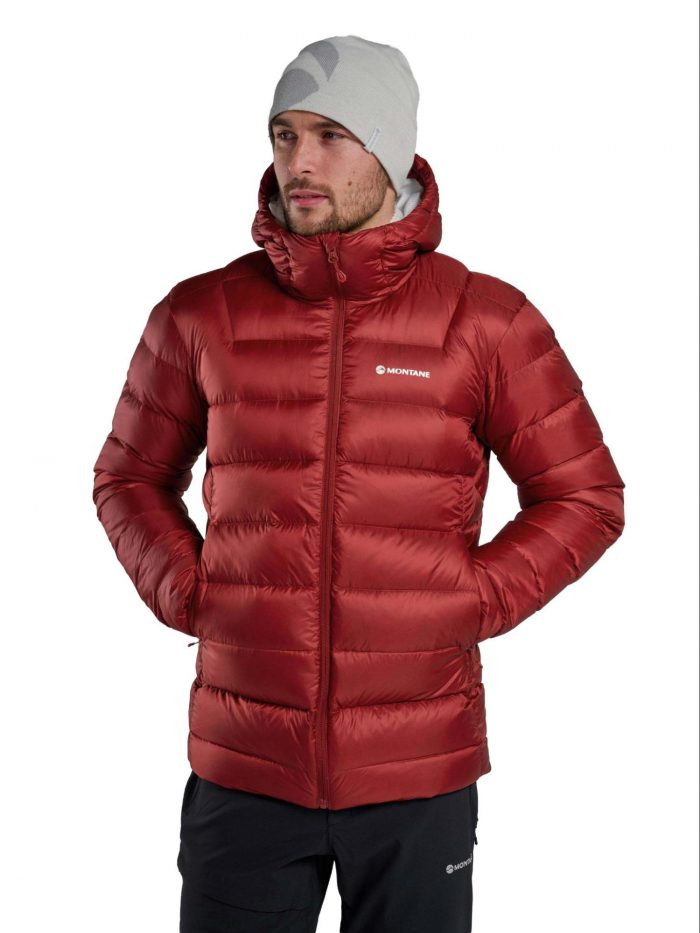
Down is the light, fluffy undercoating found beneath the tougher exterior feathers of ducks and geese. It is a natural material that creates highly efficient insulation by trapping a large volume of air for its weight.
| Pros of Down Insulation: | Cons of Down Insulation: |
|---|---|
| Highest Warmth-to-Weight Ratio Excellent Packability Long Lifespan Breathable | Vulnerable to Moisture Higher Cost Complex Care |
- Main Strength: Unmatched warmth-to-weight ratio and superior compressibility.
- Key Measurement: Fill Power (FP). This number (typically 500 to 900) measures the volume (in cubic inches) one ounce of down occupies when fully lofted. Higher Fill Power means the down is lighter and fluffier, offering more warmth with less material. High-quality down is significantly more compressible than synthetic insulation because of the natural, complex, three-dimensional structure of the down cluster, which allows it to spring back efficiently after being crushed.
Below is roughly what to expect when it comes to the down Fill Power rating:
| Fill Power | Quality | Typical Use |
| 500 FP | Standard Quality | Every day, casual winter use, light layering. |
| 600 FP | Good Quality | General hiking, three-season camping. |
| 700 FP | High Quality | Backpacking/ serious outdoor pursuits. |
| 800 FP | Extremely High Quality | Alpine climbing, ultralight gear. |
| 900 FP | Best Quality | Elite, technical, minimal-weight gear. |
Important Note: Fill Power measures the quality of the down. A higher-quality down requires less material to achieve the same loft. However, a jacket’s total warmth comes from the combination of Fill Power and Fill Weight (the actual quantity of down stuffed inside). A lower-quality down jacket can be warmer than a high-quality one if it has significantly more fill weight, but it will be heavier and bulkier.
Synthetic Insulation: The Man-Made Solution
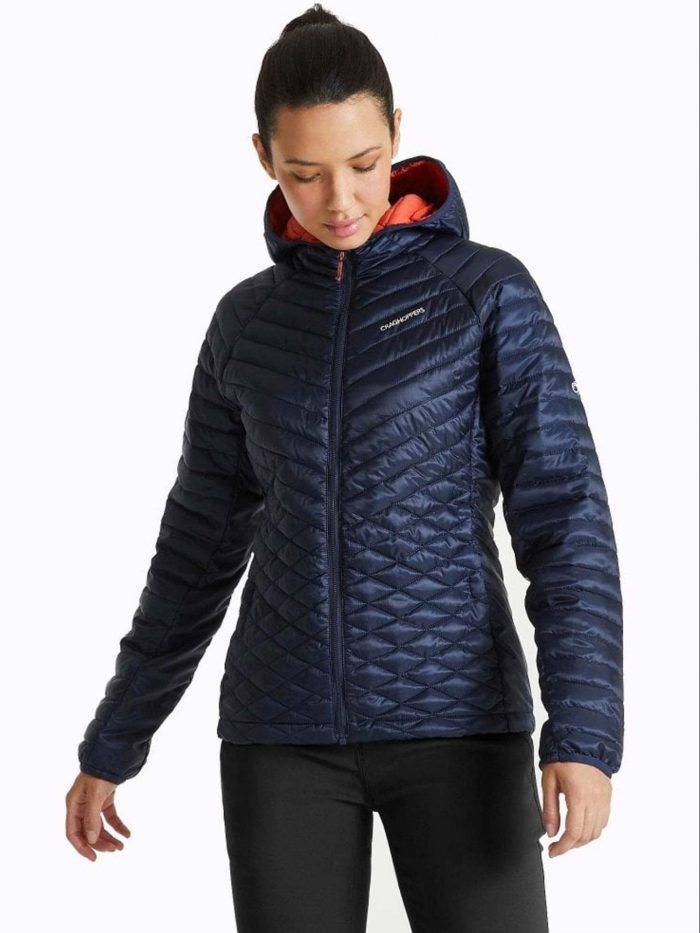
Synthetic insulation is an artificial alternative, typically made of fine polyester fibres arranged to mimic the structure of natural down clusters. This results in millions of tiny air pockets that trap heat.
| Pros of Synthetic Insulation: | Cons of Synthetic Insulation: |
|---|---|
| Retains Warmth When Wet Dries Quickly Lower Cost & Easy Care Hypoallergenic & Vegan | Heavier/Bulkier Less Durable Bulkier Pack Size |
- Core Strength: Wet-weather performance and superior durability/ease of care.
- Key Measurement: Grams per Square Metre (g/m²). Synthetic fill is measured by the density or weight of the fibres in the jacket (e.g., 60 g/m² or 100 g/m²), not by loft, as with down.
Down vs. Synthetic Insulation: The Head-to-Head Breakdown
| Feature | Down Insulation | Synthetic Insulation | Best For: |
| Warmth-to-Weight | Superior. Significantly warmer for the same weight; essential for severe cold and static activity. | Good. Offers less warmth per ounce; the jacket is heavier for the same warmth. | Down is better for backpacking and high-altitude trips where every gram counts. |
| Performance in Wet Weather | Poor. Down clumps when saturated (even with treatments), losing its loft and insulating ability. Takes a long time to dry. | Excellent. Fibres are hydrophobic and retain loft and insulating warmth even when damp. | Synthetic is best for wet, rainy, or humid climates and is more forgiving of high levels of body moisture (sweat from exertion). |
| Compressibility & Packability | Excellent. Highly compressible due to its structure, packing down very small. | Fair/Good. Compressible, but bulkier than down for the same warmth. | Down is ideal for emergency layers or overnight camping when packed volume is crucial. |
| Durability & Longevity | Excellent. With proper care, down can maintain its loft for a decade or more. | Good. Performance degrades faster. Repeated compression can cause fibres to break down and flatten over 3-5 years. | Down offers better long-term value, but requires more careful storage. |
| Price | Higher. Sourcing, cleaning, and achieving high Fill Power are more costly. | Lower. Cheaper and easier to manufacture. | Synthetic is the more budget-friendly option for equivalent warmth. |
| Care & Washing | Complex. Requires special detergent and careful low-heat drying to restore loft. | Easy. It can be washed with standard detergent and dries quickly. | Synthetic is better for frequent, heavy use and for allergy sufferers (it is hypoallergenic). |
| Ethical/Environmental | Requires responsible sourcing (look for RDS – Responsible Down Standard). | It can be made from recycled plastics and offers a vegan alternative. | Check for certifications (RDS for Down, Recycled content for Synthetic) to inform your choice. |
The Final Verdict: Who Should Buy Which?
The “better” choice depends entirely on your intended use, activity level, and environment.
Buy Down If You Need to Stay Warm and Dry (Passive Use in Cold)
Down is ideal if:
- You are a cold-city commuter or heading to high-altitude/very dry climates where weight and space efficiency are paramount.
- You prioritise maximum warmth-to-weight ratio. This factor is critical for backpackers and mountaineers covering long distances.
- You require maximum warmth during sedentary periods, such as camping, sitting around a fire, or belaying.
- You are prepared to invest more initially for a jacket that lasts longer and are diligent about proper storage and cleaning.
Buy Synthetic If You Expect Wet Conditions or High Activity
Synthetic is the practical choice if:
- Your primary concern is wet-weather performance when you will encounter rain, heavy snow, or high humidity.
- You plan to engage in high-exertion activities such as fast hiking, winter running, or intense climbing. Synthetic insulation handles body moisture (sweat) better, retaining warmth while wet.
- You need low-maintenance gear that can be washed frequently and handled roughly, with minimal care required.
- Budget is a factor, or you need a hypoallergenic solution.
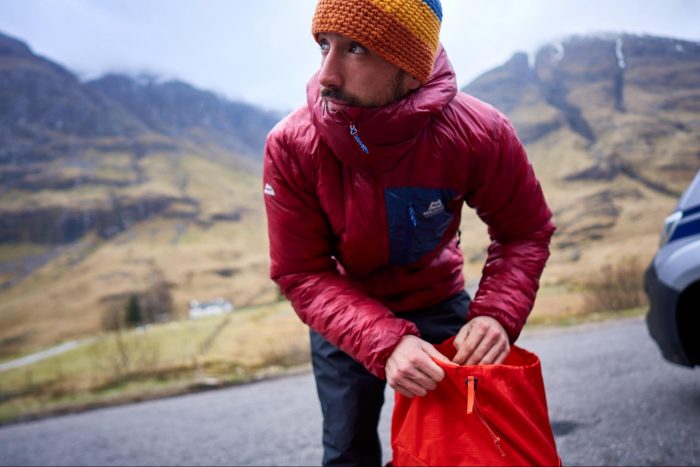
Ready to Kit Up?
Whether you’re after the lightweight, premium performance of down or the resilient, wet-weather dependability of synthetic insulation, we have a complete range of gear from top brands like Berghaus, The North Face, Sprayway, and more.
Find your ideal insulated jacket today and be prepared for the outdoors.
Comments are closed here.