
Tent Components & Features: Parts of a Camping Tent
Whether you are a seasoned trekker or a family preparing for your first summer getaway, your tent is your home away from home.
Understanding the “anatomy” of your tent is essential for two reasons: knowing what to pack and being able to source the correct replacements if something goes wrong.
In this guide, we break down every component of a modern camping tent, from the fabric of the flysheet to the technical benefits of a footprint.
Quick Reference: Labelled Parts of a Tent
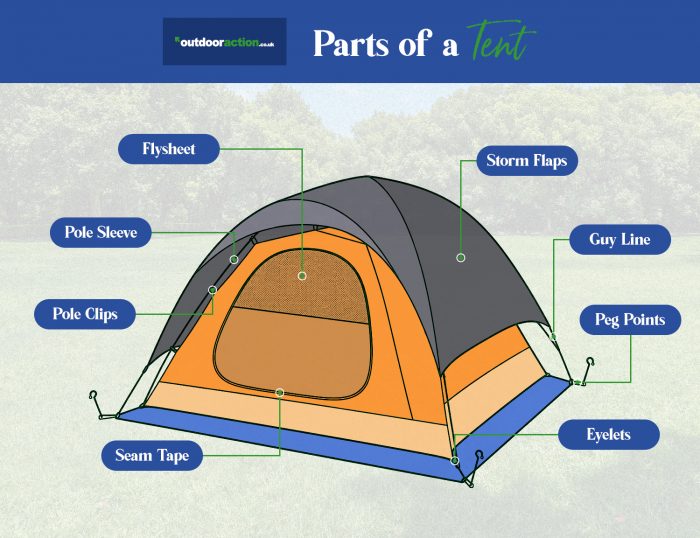
If you are searching for replacements or checking your inventory, here is the standard terminology:
- Flysheet: The outer waterproof shell.
- Inner Tent: The breathable hanging compartment where you sleep.
- Pole Sleeve: The fabric tunnel on the flysheet where poles are inserted.
- Pole Clips: Plastic hooks used as an alternative to sleeves to snap the tent body directly onto the poles.
- Grommets (Eyelets): The metal rings located at the corners of the tent floor where the tips of the poles are inserted to create the tent’s structural arc.
- Guy Line: The tension ropes used for stability.
- Peg Points: The loops at the base of the tent where stakes are inserted.
- Storm Flaps: Protective strips of fabric that cover your zippers to stop wind and rain from penetrating the zipper teeth.
- Seam Tape: A clear, waterproof tape applied over the interior stitching to prevent water from leaking through the tiny needle holes.
Understanding Tent Poles
The poles are the structural foundation of your tent. For most mid-sized family tents (4–6 person), you will generally encounter two main materials: Fibreglass and Steel.
| Pole Type | Common Use | Pros | Cons |
|---|---|---|---|
| Fibreglass | The most common for budget and standard family tents. | Lightweight, flexible, and affordable. Perfect for standard conditions. | Can splinter or snap under extreme stress or high winds. |
| Steel | Often found in larger 5 or 6-man family tents. | Offers maximum rigidity and strength. Provides a solid, secure feel. | Much heavier to transport and assemble. |
| Aluminum | The gold standard for backpacking and premium mid-size tents. | High strength-to-weight ratio. They bend rather than snap under pressure. | More expensive than fibreglass. |
| Air Beams | Inflatable family tents. | Extremely fast and easy to pitch. No rigid poles to snap in high winds. | Requires a pump; tents are bulky and heavy when packed. |
The Anatomy of a Pole Repair
If you do suffer a breakage, knowing these parts will help you fix it:
- Shock Cord: The elastic bungee cord running through the centre of the poles that automatically snaps the sections together.
- Ferrules: The metal connecting tubes attached to the ends of the individual pole sections.
- Pole Splint (Repair Sleeve): A small metal tube often included in your repair kit. If a pole snaps, you slide this over the break and tape it down as a temporary field fix.
- Pole Hub: In complex tent shapes, this is a central connector piece where multiple poles click together like a spiderweb to form a rigid dome.
- Airbeam: Carry some suitable inflatable repair kit to get you through your holiday, most brands and stores carry spares if a full replacement is required.
The Outer: Flysheets, Fabrics and Airflow
The Flysheet is the outer, waterproof layer of your tent.
How is Waterproofing Measured?
When buying a tent, you will see a specification called Hydrostatic Head (HH), measured in millimetres (e.g., 3000mm HH). This indicates how much water pressure the flysheet can handle before water seeps through. A rating of 1500mm is generally considered the minimum for a waterproof tent, while 3000mm to 5000mm is ideal for unpredictable weather.
Fabrics:
- Polyester: The standard for durability and UV resistance.
- Ripstop: A fabric with a reinforced crosshatch pattern that prevents small snags from tearing.
- Polycotton: Ideal for warmer climates as the fabric breathes more easily. It’s also not as susceptible to UV Degradation giving you many more years.
Ventilation & Mesh
A common mistake beginners make is closing all the zips to stay warm. However, ventilation systems are crucial to prevent condensation.
Mosquito Nets: Featured on tent doors and windows, allowing airflow while keeping midges and bugs out.
The Interior: Comfort, Storage, and Darkened Bedrooms
Darkened Bedrooms
One of the most significant innovations in recent years is the darkened bedroom. By using breathable, darkened fabrics in the sleeping compartments, these tents block out early morning sunlight. This is a game-changer for parents with young children or anyone who doesn’t want to wake up at 5:00 am with the sun!
Interior Utility
- Room Dividers: For larger 4-6 person tents, these are removable fabric walls that hook into the ceiling to separate the sleeping area into private compartments.
- Gear Lofts & Pockets: While pockets line the walls for phones and torches, a Gear Loft suspends from the ceiling. It is the perfect place to lay a lantern for diffused ambient lighting.
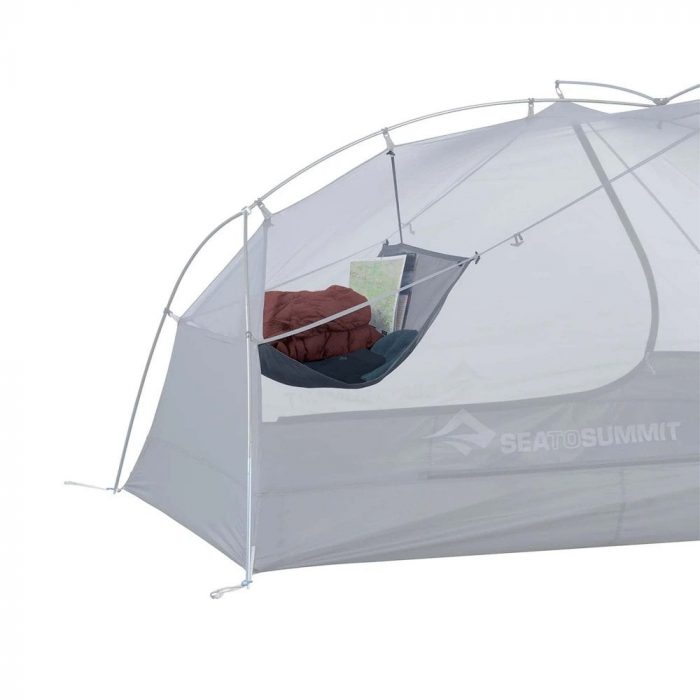
Sea to Summit Gear Loft
Stash your clothes, headlamps and other essentials within easy reach.
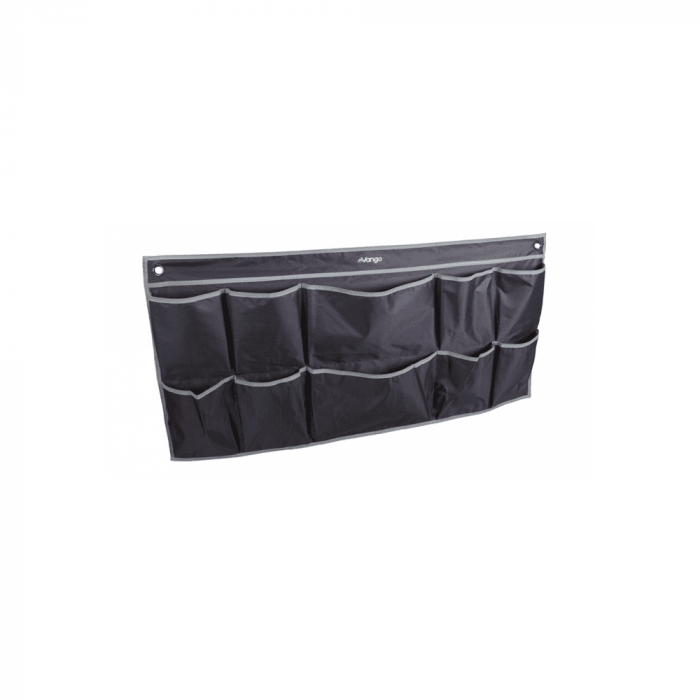
Vango Sky Storage 10 Pocket Organiser
Keep your camping gear and essentials neatly organised and easily accessible.
Stability: Guy Lines and Stakes
The guy lines and stakes are the anchors.
- Guy Ropes: These should be pulled taut and pegged at a 45-degree angle away from the tent. [Do not over-tighten so it’s pulling on the tent.] They don’t just hold the tent down; they provide the tension required to keep the flysheet from touching the inner tent (which prevents leaks).
- Tent Pegs: Not all ground is the same! While standard wire pegs work for grass, you may need “Rock Pegs” for hard ground or “V-Stakes” for sandy soil.
The Foundation: Groundsheets & Footprints
The Groundsheet is the waterproof floor of your tent. While most modern tents have an “integrated” or “sewn-in” groundsheet to keep out drafts and insects, we highly recommend using a Tent Footprint.
What is a Tent Footprint, and is it necessary?
A footprint is a secondary waterproof sheet cut to the exact shape of your tent’s floor.
- Why use one? It protects your expensive tent floor from sharp stones, thorns, and mud.
- The Benefit: It is much easier to clean a muddy footprint than the bottom of a massive 6-man tent. It also adds an extra layer of insulation from the cold ground.
The Vestibule (Your Tent Porch)
Some tents include a vestibule or porch area, where the waterproof flysheet extends past the inner tent door. This area is the perfect place to kick off soaking wet coats, muddy walking boots, or sandy flip-flops before unzipping the inner tent.
It keeps your backpacks, cool boxes, and extra equipment protected from the rain and morning dew without cluttering up your valuable sleeping space.
Shop tents from Outdoor Action
Knowing your flysheet from your footprint, and your fibreglass from your air beams, takes the guesswork out of camping and understanding your tent’s anatomy ensures you’re prepared for whatever nature throws your way.
Before you head to the campsite, make sure your gear is up to the task. Need to replace some bent pegs, upgrade to a more robust family tent, or grab that essential footprint? Shop our full selection at Outdoor Action.
Related
Essential Camping Packlist: What Do You Need For Camping?
The Ultimate Guide To What Food To Take Camping
Comments are closed here.