
OUTDOOR FIRST AID KITS. WHAT YOU NEED AND WHY.
Whether you’re a seasoned mountain goat or a hiking newbie, first aid kits are arguably the most important bit of gear you’ll pack in your rucksack.
As amazing as the mountains are, they are unforgiving no matter how much experience you have. Understanding the risks, knowing how to deal with them and preparing yourself with an appropriate first aid kit is essential.
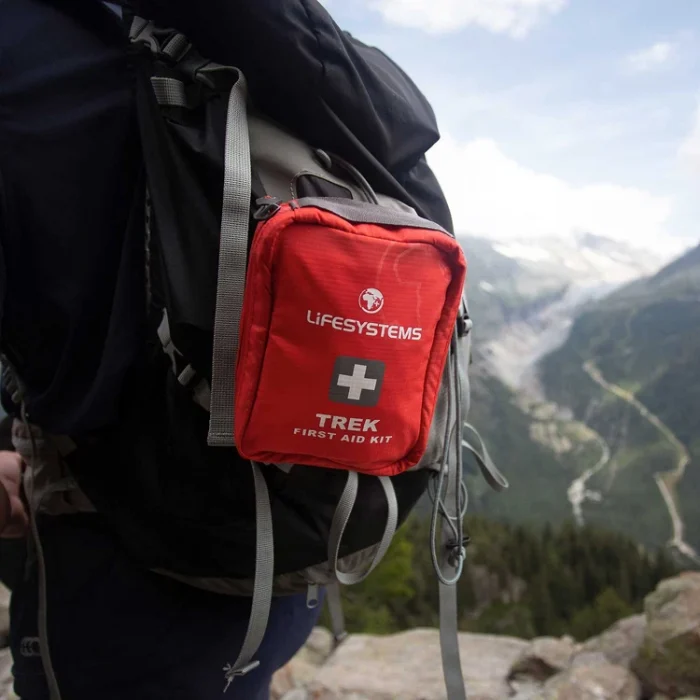
What Should I Look For In A First Aid Kit?
Kits can vary depending on the activity you need it for, so it’s important to do your research to see if there are any specific additions you might need before you set out on your adventure. You can build your own kits but, if you don’t quite fancy that, there are plenty of pre-packed kits out there for you to buy.
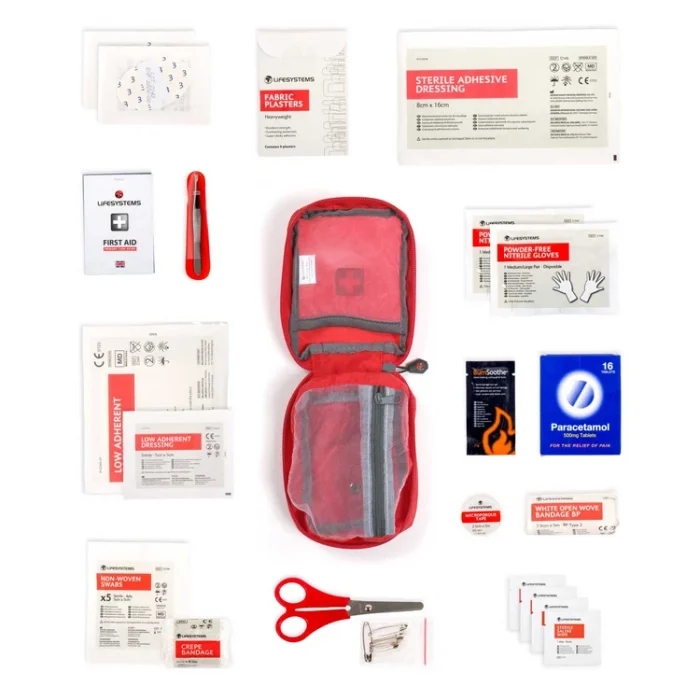
Some basic necessities that you’ll often find in standard pre-packed trek/pocket first-aid kits are:
- Plasters: to cover small wounds.
- Blister Plasters: to protect blisters and prevent further rubbing.
- Pain Killers: to help reduce pain from injury.
- Antiseptic Wipes: to clean wounds.
- Scissors: to cut tape, dressing or clothing if necessary.
- Foil Blanket: to help prevent/treat hypothermia and shock. They reflect up to 90% of a person’s radiated body heat back toward them, while also blocking wind and rain.
- Wound Dressings: useful to attach to a bandage when dealing with bleeding wounds.
- Bandages: hold dressings in place, use as a sling, or support injured muscles or joints.
- Steristrips: useful for closing wounds that have reasonably straight openings.
- Tweezers: to remove splinters, stings and ticks. Ticks can carry Lyme Disease, so removing them as soon as possible is really important.
- Safety Pins: to secure bandages or temporarily fix clothing or gear.
- Nitrile Gloves: to keep yourself and the injured protected when giving first aid. Make sure you use nitrile, not latex as some people are allergic.
- Burn Gel: to provide immediate cooling relief, protect damaged skin from infection and help soothe any burns, including severe sunburns.
- Gauze: for mopping up and cleaning wounds.
- Micropore Tape: to secure dressings or support injured fingers or toes.
Overkill? Maybe. But wouldn’t you rather be overprepared than underprepared?
Some extras that you might want to add to your kit:
- A Whistle: to signal for help. Knowing the international mountain distress signal is essential.
- Rehydration Sachets: to quickly restore your body’s natural fluid balance. This can prevent potential emergencies related to dehydration and fatigue.
- Emergency Head Torch: to keep you safe and seen in the dark and to use as a distress signal if you need help and aren’t carrying a whistle.
- Waterproof Paper and a Pencil: to note any injuries, location details, and the nature of an incident before calling the police.
Why Do I Need To Carry One?
The risks of being in the mountains don’t disappear just because you’re experienced. While you’re less likely to end up in a dangerous situation with the right gear and the right precautions, the weather remains unpredictable and the mountains unforgiving.
You never think it’ll happen to you, until it does. Anyone can find themselves in an unexpected situation where they need first aid, whether that’s yourself, a member of your party, or a fellow hiker you’re passing by. So, if you’re not packing it for yourself, pack it for someone else. You’ll only ever regret not packing it.
Calling Mountain Rescue
If you’re ever in a situation where you or someone else is injured, first aid isn’t quite cutting it, and you can’t get yourself or someone else back down to civilisation safely, assess the severity and call Mountain Rescue if necessary.
Mountain Rescue teams are volunteers, so like any other emergency service, don’t abuse their help. Only call them if you need to, but equally, don’t be a hero and potentially cause a greater casualty to yourself or the injured by trying to carry out the rescue yourself.
How to contact Mountain Rescue:
Regardless of where you are, you’ll need to provide your location, with a grid reference if possible, and details of the incident. Apps such as What3Words, GridPointGB, or a map will give you a grid reference and a more accurate location for emergency services to find you.
Whether you think you’ll lose signal or not, always register your phone with the emergency services offline system before you set off on your adventure. This lets you contact them when you have no signal.
You can do this by texting ‘REGISTER’ to 999.
If you face an emergency in an area with signal, you’ll need to call 999 or 112, ask for the Police and then ask for Mountain Rescue. If you’re in an area without signal, or you have hearing or speech difficulties, you’ll be able to contact 999 through text, following the same procedure and asking for the Police, with details of the incident and location.
You can find more on Mountain Rescue at https://www.mountain.rescue.org.uk/ .
Related Posts
Comments are closed here.