
How To Use Walking Poles
Walking poles are useful to enhance your hiking experience, whether navigating rugged mountain trails or enjoying a leisurely forest walk.
These poles offer many benefits, like improving balance, reducing joint stress, and helping maintain endurance on longer hikes. However, it’s important to understand how to use trekking poles correctly to ensure you reap the benefits.
In this guide, we’ll walk you through how to use walking poles, explore advanced techniques, and help you avoid common mistakes to maximise your hikes.
Table of Contents
Advanced walking pole techniques
How to choose the right trekking poles
How to use walking poles
1. Use a relaxed grip
When gripping the poles, make sure to relax your hands. A relaxed grip means you won’t need to flick the pole with too much effort with each step, preventing fatigue on longer hikes. A tighter grip can tire your hands and wrists.
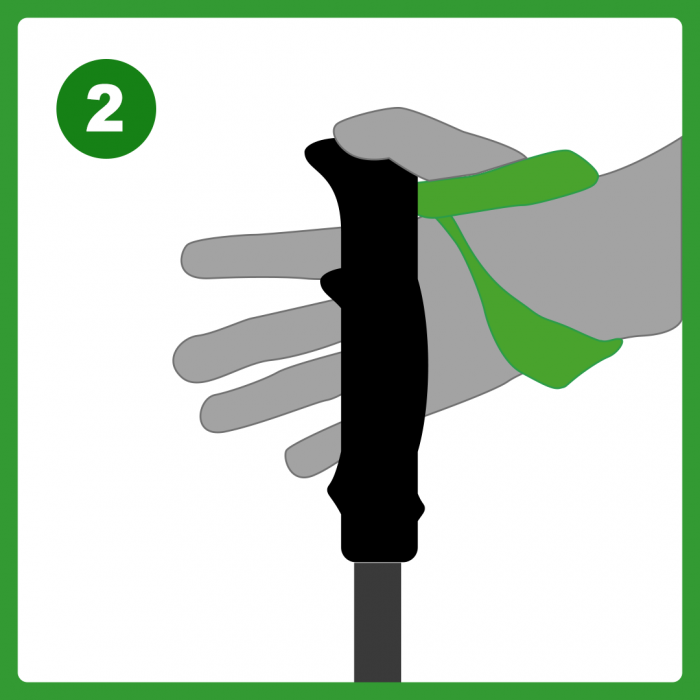
Put your hand through the loop from underneath to properly use the wrist straps. The loop should be big enough to go to about the wrist and allow you to grab the handle comfortably. If it is too short, the strap will be tight on the wrist, too long and you won’t get enough support.


2. Ensure proper arm motion
Keep your elbows close to your sides for the best balance and efficiency. When you take a step, move the pole on the opposite side of your forward leg, flicking it forward with your forearm or a slight wrist flick.
Bring the walking pole up enough so that the tips touch the ground with each step, but don’t plant the tip into the ground too hard. Your arms should move forward and backwards naturally with no forced or exaggerated arm motion.
3. Adjust your poles
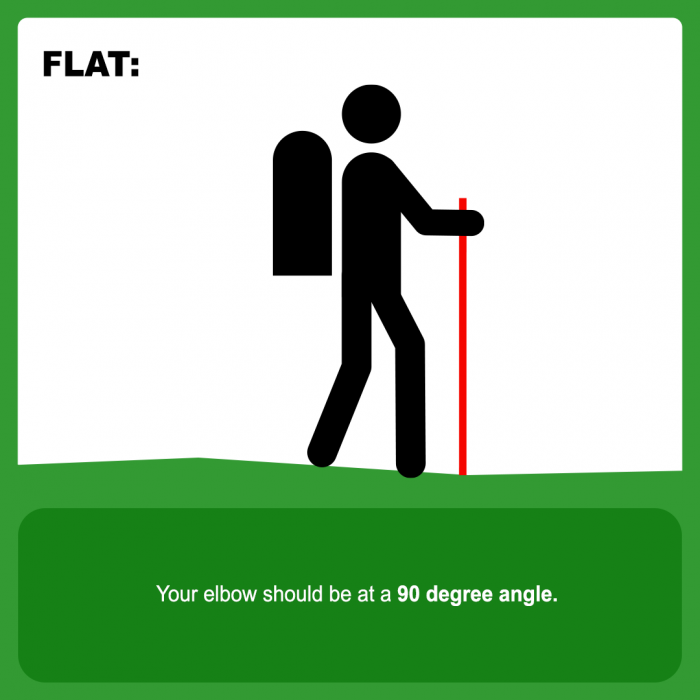
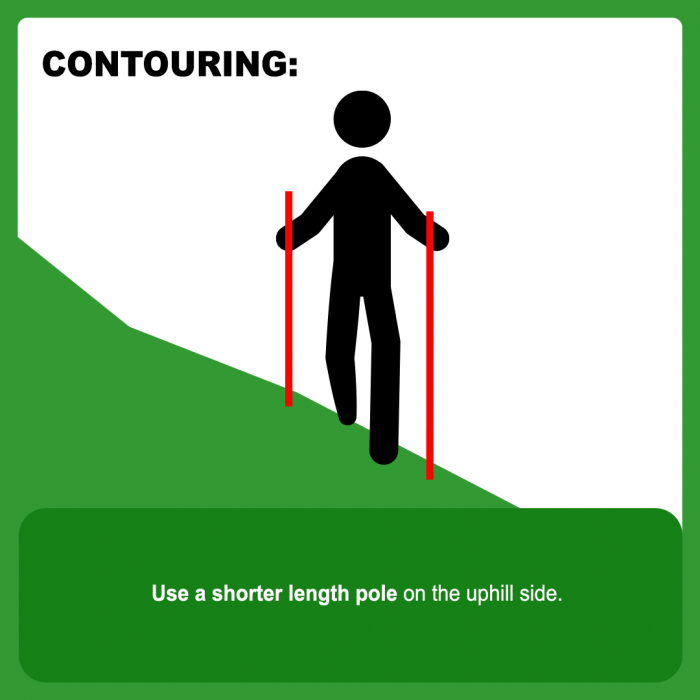
When standing with the pole tip on the ground beside your foot, your elbow should form a 90-degree angle, the best angle for stability. Depending on whether you’re walking uphill or downhill, you’ll need to shorten or lengthen the pole.
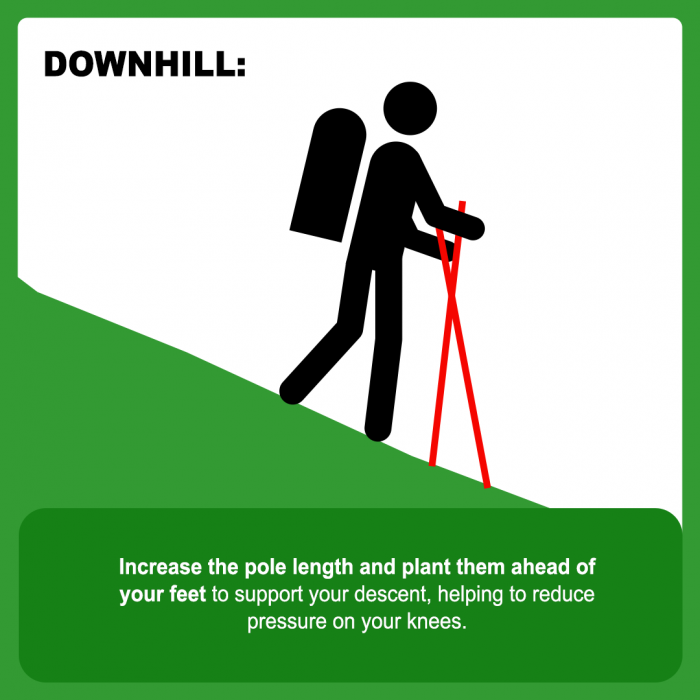
Downhill: Increase the pole length and plant them ahead of your feet to support your descent, helping to reduce pressure on your knees.
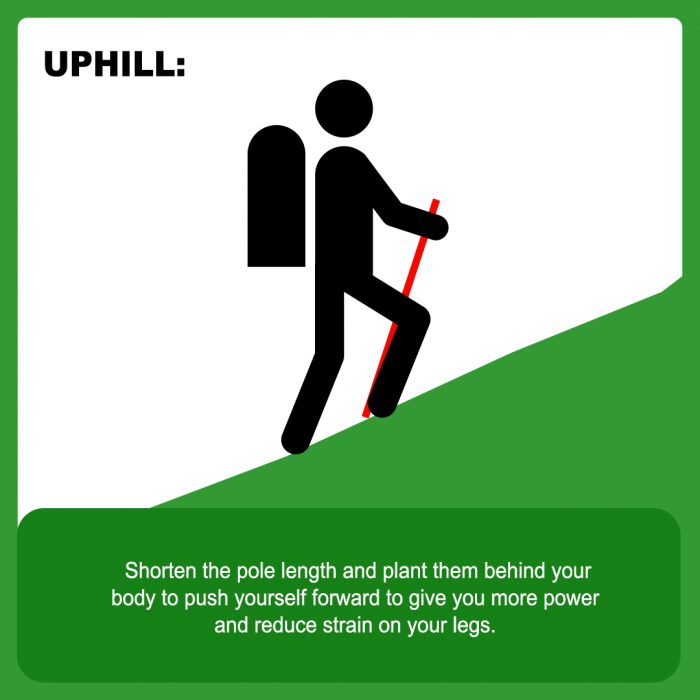
Uphill: Shorten the pole length and plant them behind your body to push yourself forward to give you more power and reduce strain on your legs.
4. Keep your posture straight
Always keep your back straight, shoulders relaxed, and eyes looking ahead as you walk. Place the poles slightly ahead of your feet and step forward naturally when planting them.
5. Start with small steps and shorter walks
When practising, start with small steps. Plant the pole first and then step forward with the opposite leg to help you maintain your balance and prevent overusing your arms.
Start by using your walking poles on shorter walks and gradually increase the duration and intensity as you get used to the movement.
Advanced walking pole techniques
Once you’ve mastered how to use your walking poles comfortably, you can experiment with different techniques. These include:
- Double planting: Using both poles simultaneously when climbing steep hills for extra power.
- Nordic walking: Involves a straight arm swing, longer stride and a roll through the foot to engage more muscles and share the load between the upper and lower body.
Common walking pole mistakes
Even experienced hikers can make mistakes when using trekking poles, but it’s important to avoid some common mistakes to ensure you’re using them effectively.
- Using the wrong height: Poles set too high or too low can throw off your balance and cause fatigue. Adjust them based on the terrain.
- Leaning too heavily on the poles: This can cause muscle strain on your arms, causing fatigue instead of alleviating it.
- Planting the poles too far in front of your feet: This makes it harder to push off and can cause strain on the joints.
- Incorrect strides: Walking without syncing your steps with the poles can feel awkward and inefficient. Find a rhythm that feels comfortable.
Why use trekking poles?
The benefits of walking poles are particularly felt when going up or downhill as they will relieve pressure on joints and muscles. Other benefits of walking poles include:
- Improved balance on uneven or slippery terrain
- Reduced strain on your knees and joints, especially during descents
- Shared effort between the upper body and legs, which reduces fatigue
- Makes it easier to carry heavy rucksacks
How to choose the right trekking poles
Before you learn how to use walking poles, choosing the right ones for your needs is important.

Here are some features to consider:
- Adjustable: Poles with adjustable height are ideal for different terrains.
- Fixed-length: These are lightweight but lack flexibility for changing conditions.
- Collapsible: Easy to pack and carry, especially useful for travel.
- Shock-absorbing: Ideal for those with joint pain, as they reduce impact forces.
- Straps: Walking poles with straps are useful as they allow you to walk with a looser grip and a more relaxed style.
- Handles: Cork handles are perfect for hot weather as it wicks sweat away, while ergonomic rubber handles can feel more natural to hold.
- Weight: Lighter poles reduce fatigue but are not as durable. Carbon poles are lighter, but aluminium poles are stronger.
- Locking mechanism: Lever locks are best for quick adjustments and durability. Twist locks are best for lightweight hikers who prefer minimal gear. Push button locks are foldable, travel-friendly poles.
- Baskets & Tips: Carbide tips are great for rugged terrain, as they grip rocks and hard surfaces well. Rubber tips are ideal for urban hiking or flat, paved trails. Snow and mud baskets are best for trekking on snow, sand, or mud trails.
Shop walking poles from Outdoor Action
Trekking poles can enhance your hiking experience, improve balance, and protect your joints. Whether you’re a beginner or an experienced hiker, proper pole use can make a huge difference in your endurance and comfort on the trail.
At Outdoor Action, we have a collection of walking poles from trusted outdoor brands in our selection, like Leki and walking pole accessories to upgrade or replace damaged parts, with rubber tips for improved grip and mud baskets to stop your pole from sinking too deeply into soft ground.
Comments are closed here.