
How To Choose Footwear Insoles for Walking, Running, and Skiing
When you get new walking boots or shoes, the footbed inside is made to fit many different foot shapes. But because everyone’s feet are unique, this standard footbed might not give you the support you need.
Upgrading to a specialised insole lets you customise your footwear for your own comfort, giving your feet the support they need, spreading your weight evenly, and reducing strain on your feet and legs.
This guide will help you figure out what your feet need and how to choose the right insoles for your running shoes, walking boots, and ski boots, so that you can enjoy your outdoor activities for longer.

Do I need insoles?
You should consider upgrading to a technical insole if you experience blisters, foot pain, joint pain…
Understanding pronation
Examine the wear patterns on your old shoes. Overpronation (heavy wear on the inside edge) requires structured support, while underpronation…
How do I know my foot arch type?
Use the ‘wet foot test’ to determine if you have low, medium, or high arches.
Should Insoles Be Supportive or Cushioning?
Insoles are made to provide different levels of comfort and support, depending on what feels best for you. Structured and responsive or adaptive and cushioned…
Understanding insole thickness
Match the insole volume to the space inside your shoe. Prioritise proper arch placement over total length, and always remove the factory insole before…
Choosing an insole based on activity
Walking and skiing demand rigid stability and deep heel cups for mechanical alignment, while running requires high shock absorption and energy return.
How to Know If You Need Technical Insoles (And What They Actually Do)
You should consider upgrading to a technical insole if you experience any of the following:
- Joint Pain: Aching knees, hips, or lower back after a hike suggests your lower-body alignment is off. 2025 data from the Journal of Foot and Ankle Research shows that 1 in 10 people over 50 suffer from disabling Plantar Heel Pain, with half still experiencing symptoms a decade later. Early intervention with a supportive insole is crucial.
- Blisters and Heel Slip: If your heel lifts inside the boot when you walk, it creates friction and can cause blisters. A technical insole with a deep heel cup locks the back of your foot in place, preventing this movement.
- Foot Fatigue: If the soles of your feet ache intensely or feel bruised, your arch is likely collapsing under your body weight—especially when carrying a heavy rucksack. Recent outdoor trends indicate that 70% of hiking accidents occur between 12 PM and 6 PM, a period known as the “Fatigue Peak.” After hours of walking, your arches begin to collapse under your body weight, leading to slips and trips that account for half of all outdoor injuries.
- Feeling the Terrain: If you start feeling every sharp stone and tree root through the bottom of your boot, your current footbed has “bottomed out” and is no longer protecting you.
What a proper insole actually does for you is provide mechanical structure. Instead of just adding soft, temporary padding, it distributes your weight evenly across your foot’s entire surface. This support stops your arch from collapsing, keeps your knee joint aligned over your toes, and turns your boot into a much more stable, supportive platform for rough terrain.
Understanding Pronation and Shoe Wear Patterns
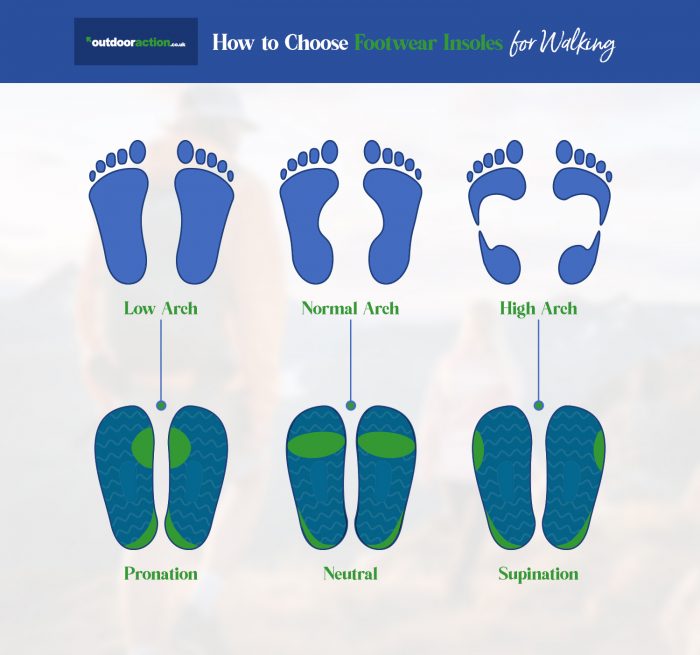
Pronation is the natural inward roll of your foot as it strikes the ground. It is how the human body naturally absorbs shock. However, many people over-pronate or under-pronate, leading to joint discomfort, fatigue, and uneven wear on boots and shoes. You can easily diagnose your foot mechanics by examining the tread on the soles of your heavily used outdoor footwear.
Overpronation
The foot rolls inward excessively upon impact, shifting your body weight to the inner edge of the foot and forcing the big toe and second toe to do all the work during push-off.
- Shoe Wear Pattern: Heavy deterioration on the inside edge of the heel and the inner edge of the ball of the foot.
- Associated Foot Type: Highly common in individuals with flat feet or low arches.
- The Fix: Requires a structured, responsive insole with a firm arch support and a deep heel cup. This support mechanically stabilises the foot, preventing the arch from collapsing inward during a heavy stride.
Underpronation (Supination)
The foot fails to roll inward enough, placing the entire burden of the impact on the outer edge of the foot.
- Shoe Wear Pattern: Severe, concentrated wear along the extreme outside edge of the shoe, from the heel to the little toe.
- Associated Foot Type: Typically associated with high, rigid arches.
- The Fix: Requires an adaptive, highly cushioned insole. Because a supinating foot is rigid and absorbs shock poorly, the insole must provide maximum impact absorption to protect the knees and lower back.
Neutral Pronation
The foot lands on the outside of the heel and rolls inward a healthy amount to absorb shock, pushing off evenly from the front of the foot.
- Shoe Wear Pattern: Even wear in an S-shape from the outer heel to the big toe.
- Associated Foot Type: Usually paired with medium arches.
- Insole suggestion: May benefit from a standard medium-arch insole to maintain proper anatomical alignment and reduce general foot fatigue over long distances.
How Do I Know My Foot Arch Type?
The most practical way to determine your foot shape is the ‘wet test’.
The Wet Foot Test:
- Dip the sole of your bare foot in water.
- Step normally onto a piece of heavy paper, flattened cardboard, or a dry paving flag so your footprint is clearly visible.
- Step off and examine the shape of the print left behind.
Compare your footprint to the three main categories:
- Low Arches (Flat Feet): The print shows almost the entire bottom of the foot in contact with the ground, with little to no inward curvature in the middle. This foot type requires a structured, low-profile insole to provide stability without causing painful mid-foot pressure.
- Medium Arches: The print shows a distinct band connecting the heel and the ball of the foot, with a moderate curve inward. This arch shape is the most common foot type. A medium arch insole provides standard foundational support and shock absorption.
- High Arches: The print shows only the heel and the ball of the foot, with either a very thin band or a complete gap in the middle. High arches absorb shock poorly. You need an insole that fills the space under the foot to distribute pressure evenly across the entire surface.
Should Insoles Be Supportive or Cushioning?
Insoles are designed to provide different levels of comfort and support, depending on what feels best for you.
| Insole Type | Primary Materials | Key Benefits | Best For |
|---|---|---|---|
| Structured / Responsive | Carbon fibre, rigid plastics, dense EVA foam | Maximum stability, mechanical alignment, targeted pain relief | Plantar Fasciitis, correcting flat feet, heavy load bearing |
| Adaptive / Cushioned | Memory foam, polyurethane, gel pods | High impact absorption, soft comfort, flexible movement | Reducing foot fatigue, sensitive feet, and high-impact running |
Structured insoles change the way your foot functions. Do not head straight out on a long hike. Wear them around the house for a few hours a day for a week to let your arches and tendons adapt to the new alignment.
Choosing an insole based on activity
Different activities place unique mechanical demands on the human foot. You must select an insole engineered for the specific task.
Walking and Hiking
When you carry a heavy rucksack over uneven ground, your feet need to be as stable as possible to avoid muscle fatigue. Hiking insoles use a deep, rigid heel cup to hold your heel in place. This type stops your foot from sliding inside the boot and helps prevent blisters. Surprisingly, 42% of all hiking injuries involve the ankle, despite 74% of fall victims wearing ankle-high boots. This study proves that external boot height is less critical than internal stability.
Running
Running puts a lot of repeated impact on your feet. Running insoles focus on adaptive support and targeted cushioning. They absorb shock at the heel and give flexible energy return at the front of the foot, helping you stay comfortable over long distances.
Skiing
Ski boots have a hard plastic shell that stops your foot from flexing naturally. A structured insole is important in a ski boot because it keeps your foot in a neutral position and helps you steer your skis accurately. Keeping your foot stable in the boot also properly aligns your knee joint, which helps reduce joint fatigue and prevent knee strain during a long day on the mountain.
Understanding Insole Thickness and Shoe Fit
An insole needs to fit well inside your footwear. Manufacturers sort insoles by thickness, which means how much space the footbed takes up inside the shoe.
- High Volume (Max): Made for looser-fitting shoes or boots with lots of space inside, like heavy walking boots, winter work boots, and wellingtons.
- Medium Volume: Made for standard shoes that fit well right out of the box, like running shoes, casual trainers, and lightweight hiking shoes.
- Low Volume (Thin): Made for tight-fitting shoes where space is limited, such as approach shoes, cycling cleats, or formal dress shoes.
When choosing an insole size, prioritise arch height over total length. If you are between sizes, choose the larger size so the arch shape sits correctly under your foot, then trim the excess length from the toe.
How to Trim Your New Insoles to Fit
Some insoles are designed to be trimmed. Getting this right is crucial so the insole sits flat without bunching up at the toes or sliding around.
- Remove the Factory Insole: Remove the original footbed from your walking boot or shoe. You will use this as your cutting template.
- Line Up the Heels: Place the factory insole flat on top of your new insole. Line them up firmly at the back of the heel and along the inside edge.
- Trace the Outline: Using a pen, trace the toe shape of the original insole onto the front of the new one.
- Cut Carefully: Use sharp scissors to cut along the traced line. It is best to cut slightly outside the line first—you can always trim more off, but you cannot put material back.
- Test the Fit: Push the new insole into your boot. It should lie completely flat. If the edges ride up the front or sides of the toe box, take it out and trim a fraction more off the toes until it sits flush.
Key Insole Brands Overview
We offer top insole brands, each designed with a unique approach to foot support.
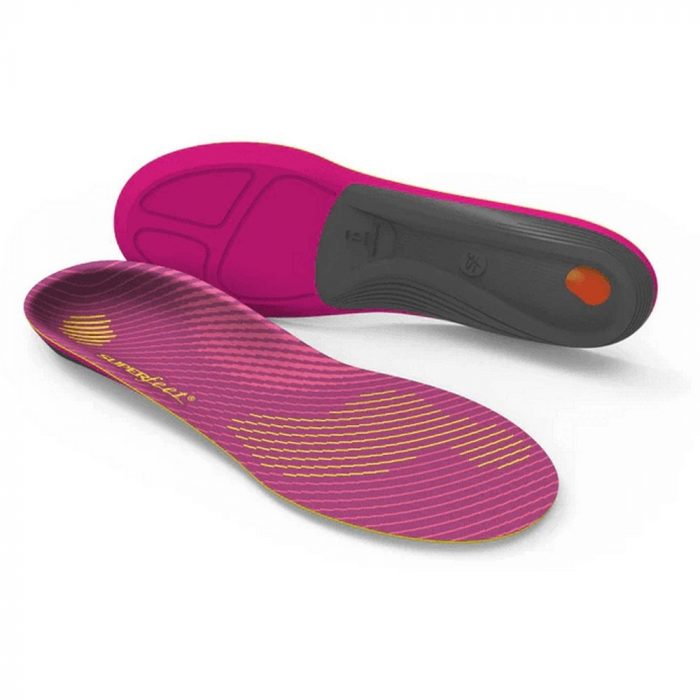
- Superfeet: Known for structured, biomechanical support. This brand is a top choice for correcting flat feet and managing high arches in walking and ski boots.
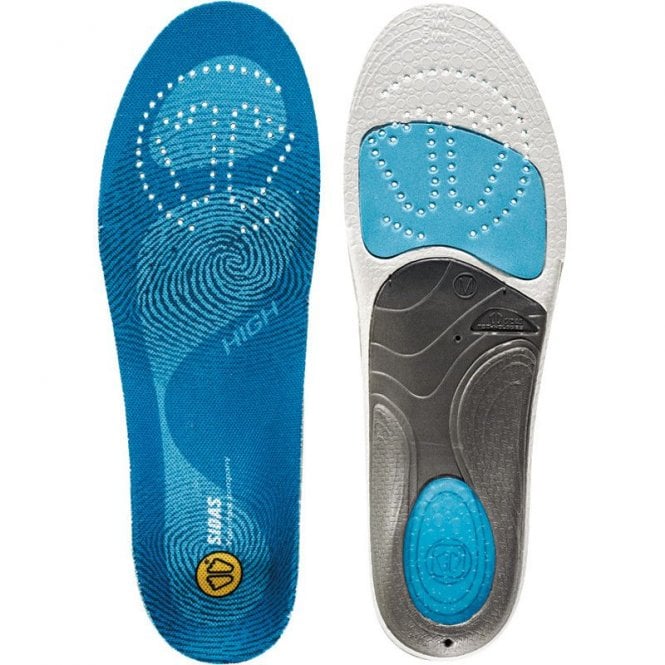
- Sidas: Experts in adaptable comfort and advanced shock absorption. Sidas insoles use 3D gel and memory foam to help reduce foot fatigue during long treks.
Frequently Asked Questions (FAQ)
Do I need to remove the original factory insole before fitting a new one?
Yes. You must always remove the standard factory footbed before inserting a structured aftermarket insole. Stacking two insoles significantly reduces the shoe’s internal volume, alters your heel height, and can cause heel slip and severe blistering.
Can I transfer my insoles between different pairs of shoes?
You can successfully transfer insoles between shoes in the same volume category (e.g., moving a medium-volume insole from running shoes to everyday trainers). Do not move a high-volume walking boot insole into a low-volume approach shoe, as this will crush your foot against the roof of the shoe and ruin the fit.
How do I properly clean my insoles?
Hand-wash insoles with lukewarm water and a mild, non-detergent soap. Never put insoles in a washing machine or dry them on a radiator. Extreme heat will melt the industrial adhesives and permanently warp the structural plastics. Always leave them to air dry naturally at room temperature.
Upgrade Your Footwear with Quality Insoles
Adding a technical insole is one of the most practical improvements you can make to your outdoor gear. A proper footbed prevents blisters, reduces joint fatigue, and provides the exact structural support your unique arch profile requires. Whether you are navigating rugged hill paths, running on hard trails, or steering skis down a mountain, your feet need a stable and reliable foundation.
To find the right fit for your walking boots, browse our full range of structured and cushioned footbeds in our insoles collection. We stock reliable, task-specific options from trusted brands like Superfeet and Sidas.
Related
How To Choose Walking Boots: The Importance of Fit
How to Prevent Blisters when Hiking
The Best Boots for Dog Walking in 2026: Practical Footwear for Mud, Rain and Snow
Comments are closed here.