
Best Softshell Jackets for Hiking in 2026
Softshell jackets often sit in a confusing grey area for outdoor gear buyers. They aren’t quite a waterproof hardshell, nor are they a standard fleece. Choosing the wrong one means you either end up overheating on a steep ascent or getting soaked through because you mistook “water-resistant” for “waterproof.”
At Outdoor Action, we’ve spent decades kitting people out for unpredictable weather on their outdoor adventures. We know that a good softshell is arguably the most versatile piece of kit you can own—if you pick the right one.
We have selected these jackets based on three practical criteria: weather resistance (knowing the difference between a DWR coating and a full membrane), breathability for when you’re working hard on the hills, and durability against rock abrasion and rucksack straps.
This guide provides a direct comparison to help you identify which jacket fits your specific outdoor activity and budget.
The Ranked List
Women’s Softshells
- Best for Maximum Weather Protection: Montane Womens Khamsin Softshell Hoodie
- Best for Summer Walking: Outdoor Research Womens Astroman Air Sun Hoodie
- Best for Fast & Light Peaks: Montane Womens Featherlite Hooded Windproof Jacket
- Best Budget-Friendly Layering: Regatta Arec III
- Best for Technical Performance: Keela Hydron
Men’s Softshells
- Best for Technical Hiking: Mountain Equipment Frontier Hooded Softshell Jacket
- Best for Cold & Wet Versatility: Montane Tenacity XT Hooded Softshell Jacket
- Best for Sustainability: Craghoppers Altis II
- Best for Lightweight Performance: Outdoor Research Ferrosi Softshell Hoodie
- Best Everyday Value: Keela Hydron Softshell Jacket
Best Women’s Softshells
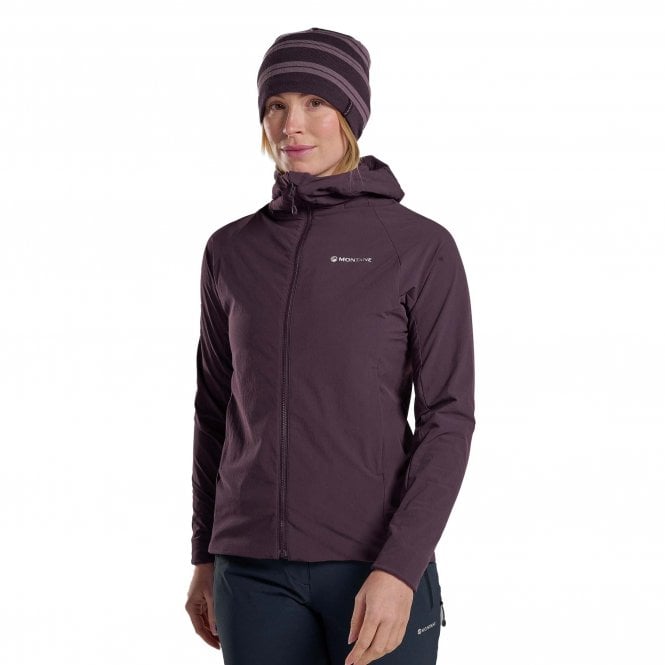
Best for Maximum Weather Protection: Montane Womens Khamsin Softshell Hoodie
The Verdict: A robust, insulated softshell built for cold-weather mountain use where standard layers fall short on warmth and durability.
Product Overview: The Khamsin uses Raptor Flex double-weave fabric paired with a mapped Octa fleece lining. This combination manages moisture during high-output activity while providing a significant thermal boost. It is designed to be tough enough to handle rock abrasion and biting winds without sacrificing the breathability needed for steep ascents.
Specific Use Case: Best for winter hiking, scrambling, and cold-weather mountain activities where you need a single layer that balances wind protection with active insulation.
Pros:
- Superior Warmth: The Octa fleece lining provides excellent thermal efficiency for its weight.
- Highly Durable: The Raptor Flex outer fabric is built to withstand rugged terrain and heavy rucksack use.
- Technical Fit: Fully adjustable hood and mapped lining make it easy to layer over baselayers.
Cons:
- Weight: At 520g, it is heavier than summer-weight windshells.
- Warmth Overlap: May be too warm for high-intensity summer use.
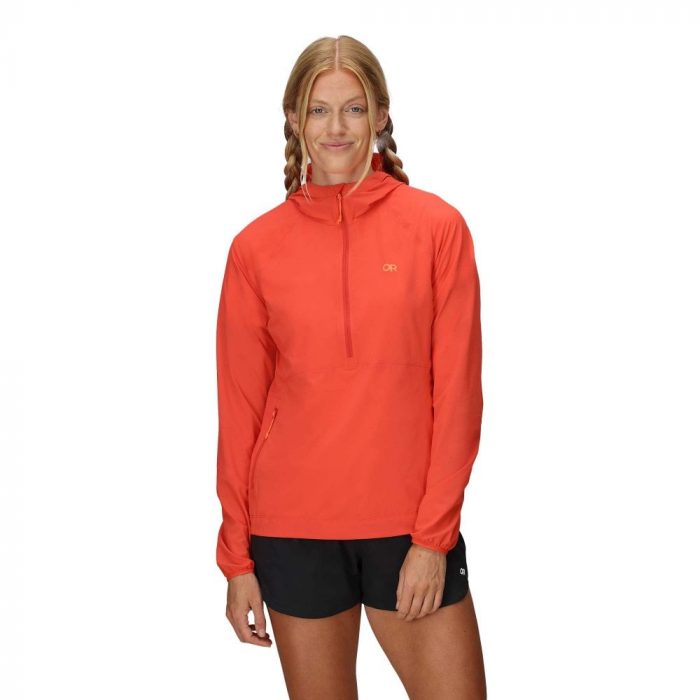
Best for Summer Walking: Outdoor Research Womens Astroman Air Sun Hoodie
The Verdict: An ultralight, highly breathable sun-protection layer designed for hot, exposed environments where a standard softshell would be too heavy.
Product Overview: Named after a famous Yosemite climbing route, the Astroman is focused on airflow and UV protection. It features laser-perforated side panels for ventilation and a high spandex content for unrestricted movement. It is quick-drying and offers UPF 30–50+ protection, making it a “softshell” in the sense of being a protective outer layer rather than a thermal one.
Specific Use Case: Ideal for summer mountain trekking, cragging, or long days in the sun where you need to prevent sunburn without overheating.
Pros:
- Exceptional Ventilation: Laser-cut holes and lightweight fabric ensure maximum airflow.
- Packable: Extremely light (156g) and takes up minimal room in a pack.
- Movement-Mirroring Stretch: Excellent for climbing or activities requiring a full range of motion.
Cons:
- Minimal Weather Protection: Provides little wind or rain protection compared to traditional softshells.
Durability: While tough for its weight, it won’t hold up as well as a heavy-duty mountain jacket.
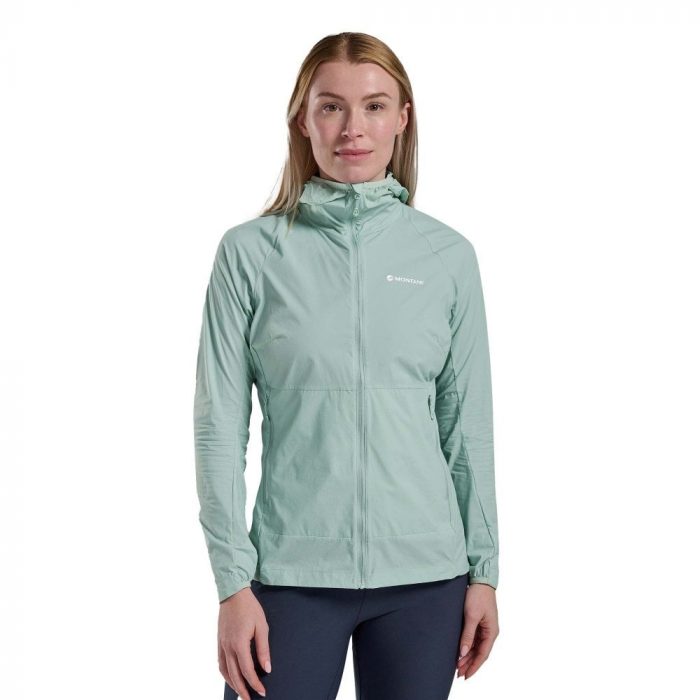
Best for Fast & Light Peaks: Montane Womens Featherlite Hooded Windproof Jacket
The Verdict: A minimalist, packable windshell that provides essential protection against wind chill without the bulk of a traditional jacket.
Product Overview: Weighing only 115g, the Featherlite uses Wind Barrier Dynamic fabric. It is a highly breathable, mini-ripstop nylon that blocks the wind while allowing sweat to escape during fast-paced movement. It features a DWR (Durable Water Repellent) finish to shed light drizzle and a helmet-compatible hood for versatility on the peaks.
Specific Use Case: Best for fast-packing, trail running, or as an “emergency” wind layer to be thrown on when you reach a blustery summit.
Pros:
- Ultra-Lightweight: At 115g, there is no excuse to leave it behind.
- Great Breathability: Designed specifically for high-energy activities where you need to avoid sweat build-up inside the jacket.
- Helmet Compatible: The hood design is compatible with helmets for climbers and mountaineers.
Cons:
- Not Insulated: Offers no thermal warmth; relies entirely on your mid-layers.
Limited Features: To keep the weight down, it lacks the pockets and adjustments found on heavier jackets.
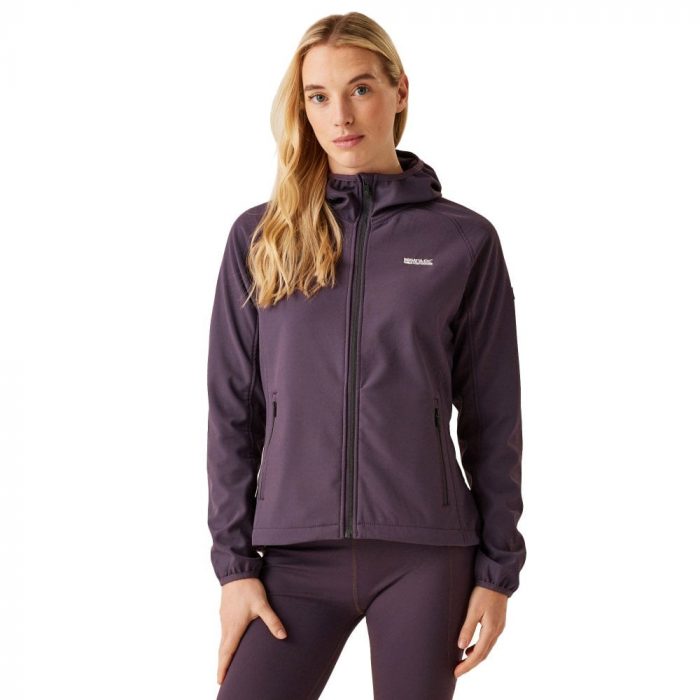
Best Budget-Friendly Layering: Regatta Arec III
The Verdict: A straightforward, reliable stretch softshell that works perfectly as an everyday midlayer.
Overview: A non-bulky design that fits well under a hardshell. It is wind-resistant and treated with a water-repellent finish.
Specific Use Case: Best for casual country walks and as a budget-friendly layer for the school run or dog walking.
Pros:
- Excellent price-to-performance ratio.
- Low bulk; fits easily under winter coats.
- Comfortable stretch fabric.
Cons:
- Basic feature set compared to technical mountain jackets.
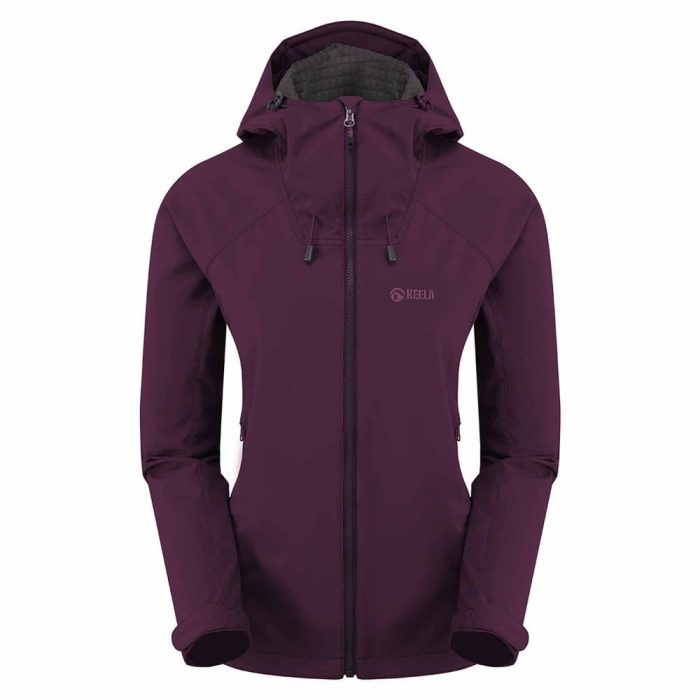
Best for Technical Performance: Keela Hydron
The Verdict: A heavy-duty mountain jacket built for tough environments, featuring exceptional ventilation options.
Product Overview: Keela is known for robust gear, and the Hydron is no exception. Made with AirXtream Fusion fabric, it offers high wind and water resistance. It is designed for active mountain use and features a helmet-compatible hood.
Specific Use Case: Best suited for winter hill walking, mountaineering, or cold-weather trekking, where protection and venting are equally important.
Pros:
- Very high water and wind resistance.
- Helmet-compatible hood for technical use.
Cons:
- The active fit may feel tight if wearing thick layers underneath.
- Bulkier than lighter summer softshells.
Best men’s softshell jackets
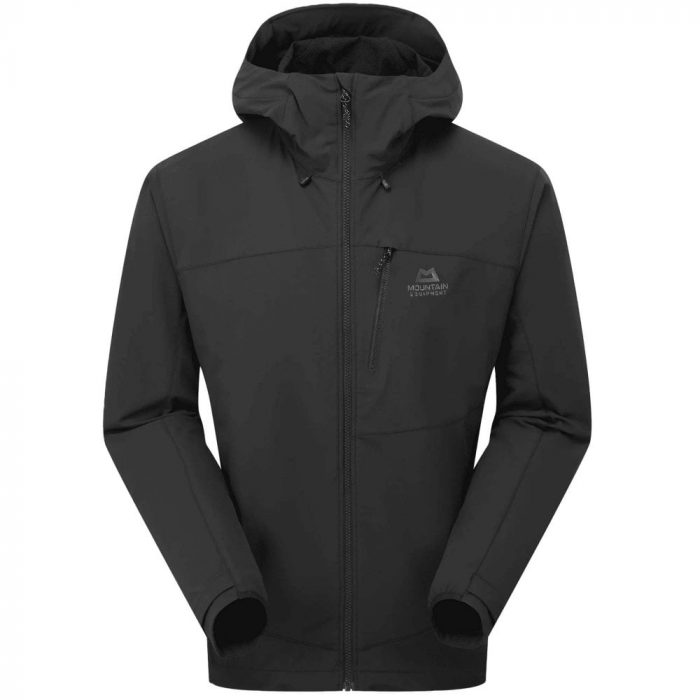
Best for Technical Hiking: Mountain Equipment Frontier Hooded Softshell Jacket
The Verdict: A high-performance, technical jacket designed for those who need a balance of wind resistance and total mobility on steep terrain.
Product Overview: The Frontier uses EXOLITE 210, a double-weave softshell fabric that is exceptionally tough against abrasion from rock or rucksack straps. It features an “Alpine Fit,” which removes excess fabric to prevent snagging, and includes a fully adjustable, helmet-compatible hood. It is built for the all-rounder who needs gear that performs as well on a technical scramble as on a windy ridge walk.
Specific Use Case: Best for mountaineering, scrambling, and technical hill walking where wind protection and durability are the priorities.
Pros:
- Exceptional Mobility: The 4-way stretch fabric and articulated sleeves allow for unrestricted reaching.
- Storage: Four zipped pockets (including a chest and inner security pocket) provide ample space for maps and GPS.
- Harness Compatible: Hand pockets are positioned high to remain accessible while wearing a climbing harness or a rucksack hip belt.
Cons:
- Technical Fit: The Alpine Fit is slim; those who prefer a baggier fit may need to size up.
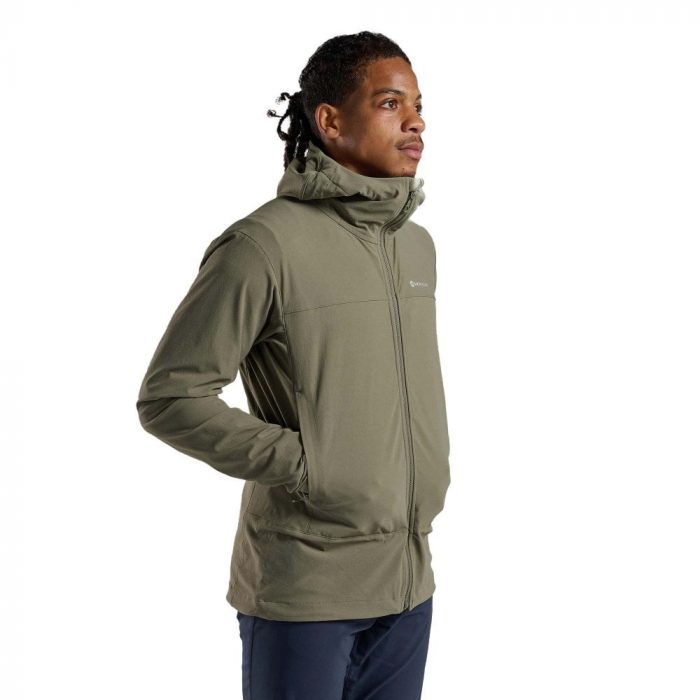
Best for Cold & Wet Versatility: Montane Tenacity XT Hooded Softshell Jacket
The Verdict: A rugged, reliable layer that handles unpredictable mountain weather by balancing water repellency with high breathability.
Product Overview: Constructed from GRANITE Stretch fabric, the Tenacity XT is designed to be a “set and forget” layer. The double-weave construction is wind-resistant and treated to shed light rain. Its standout feature is moisture management; it moves sweat away from the body during high-exertion climbs while maintaining a “cotton-like” comfort against the skin.
Specific Use Case: Ideal for long days in the hills during autumn or spring when you expect a mix of wind, light showers, and high-output hiking.
Pros:
- High Durability: Minimal seams reduce “fail points” and friction under rucksack straps.
- Fast Drying: The fabric is engineered to dry quickly if you get caught in a heavy downpour.
- Sustainable Choice: Uses recycled nylon and fluorocarbon-free water-repellent coatings.
Cons:Not a Raincoat: While highly water-resistant, it will eventually soak through in a sustained downpour.
Best for Sustainability: Craghoppers Altis II
The Verdict: A straightforward, eco-conscious softshell that provides dependable warmth for everyday outdoor use.
Product Overview: The Altis II focuses on warmth and value. It features a microfleece inner lining that traps heat, making it much warmer than the thinner technical shells. The outer is treated with Craghoppers’ H2OShield to deflect light drizzle and wind. It has a regular fit, making it comfortable for various body types and easy to wear over a standard jumper.
Specific Use Case: Ideal for low-level trail walking, birdwatching, or as a reliable weekend jacket for the countryside.

Pros:
- Packability: The left-hand pocket doubles as a stuff sack, making it easy to clip to a harness or toss in a small daypack.
- Extreme Breathability: One of the best jackets on the market for preventing overheating.
- Thumb Loops: Low-profile cuffs stay secure during active movement.
Cons:
- Low Insulation: Provides almost no warmth; it is designed to be a protective skin rather than a thermal layer.
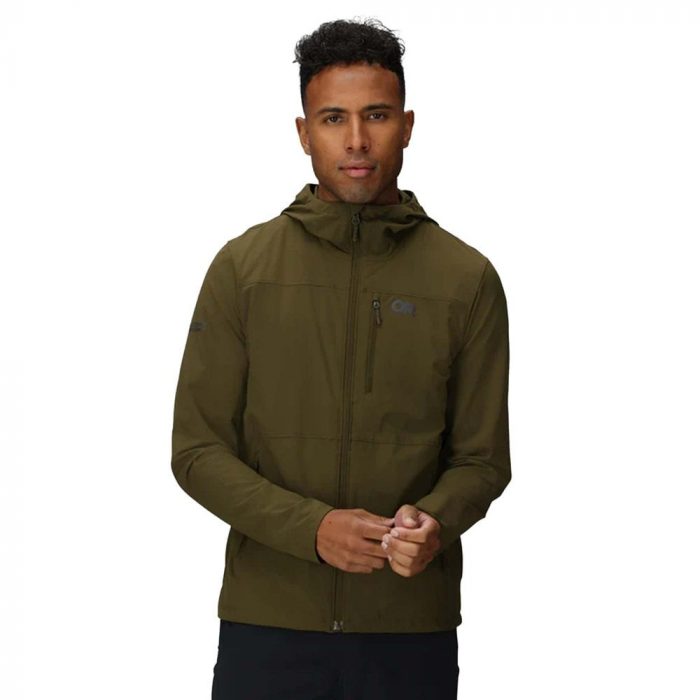
Best for Lightweight Performance: Outdoor Research Ferrosi Softshell Hoodie
The Verdict: An award-winning, ultralight layer that excels in breathability and sun protection for three-season use.
Product Overview: The Ferrosi is a legend in the outdoor world because it is incredibly thin yet surprisingly tough. Made from 90D stretch-woven ripstop, it offers UPF 50+ sun protection and blocks the wind without making you feel clammy. The 2025 update features the same reliable fabric throughout the entire garment for consistent stretch and performance.
Specific Use Case: Best for summer hiking, spring climbing, or as a lightweight wind shield for fast packing.
Pros:
- Ventilation: Pit zips allow you to dump heat quickly without removing the jacket.
- Storage: Four external zipped pockets provide excellent organisation for gear.
- Weather Resistance: One of the most “weatherproof” softshells available, featuring a storm flap behind the main zip.
Cons:
- Bulk: It is heavier and takes up more room in a pack than the more minimalist options.
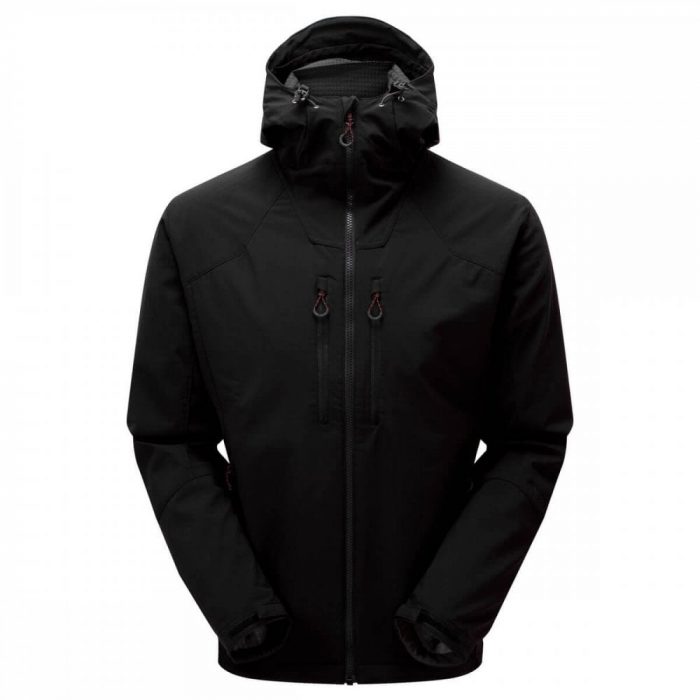
Best Everyday Value: Keela Hydron Softshell Jacket
The Verdict: A heavy-duty, feature-rich softshell that offers professional-level weather protection at a competitive price point.
Product Overview: Like its female counterpart, the Men’s Hydron uses AirXtream Fusion fabric. This system uses a matrix of air channels to regulate temperature and moisture. It is significantly more “substantial” than the Ferrosi or the Frontier, leaning toward a hardshell in terms of wind and water resistance. It also includes pit zips, a rarity in softshells, allowing for instant ventilation.
Specific Use Case: Ideal for winter hill walking and outdoor work, where you need a jacket that can withstand the elements and terrain.
Pros:
- Ventilation: Pit zips allow you to dump heat quickly without removing the jacket.
- Storage: Four external zipped pockets provide excellent organisation for gear.
- Weather Resistance: One of the most “weatherproof” softshells available, featuring a storm flap behind the main zip.
Cons:
- Bulk: It is heavier and takes up more room in a pack than the more minimalist options.
Buying Guide: What to Look For
Before choosing the right jacket for you, it is useful to understand what you are actually buying. Softshells generally fall into two camps based on their construction.
- Membrane vs. Non-Membrane:
- Membrane Softshells: These have a dedicated barrier layer bonded between the fabrics (like AquaDry). They offer significantly better windproofing and water resistance, almost like a hardshell, but they will feel warmer and less breathable when you are sweating hard.
- Non-Membrane (Stretch Woven) Softshells: These rely on a tight weave and a chemical coating (DWR) to repel light rain. They are far more breathable, making them better suited for high-intensity hiking, but heavy rain will eventually penetrate.
- Fabric Stretch: If you are scrambling or using walking poles, look for “4-way stretch.” This feature ensures the jacket moves with you and doesn’t lift at the hem when you reach up.
- Inner Lining: Consider how much warmth you need. Some softshells have thick “Borg” or microfleece linings for winter use, while others are unlined for summer use or high-output activities.
Product Summary Table
| Product Name | Gender | Best For | Key Feature |
|---|---|---|---|
| Montane Khamsin | Women’s | Winter Mountains | Raptor Flex outer |
| OR Astroman Air | Women’s | Summer Sun | UPF 50+ / Ultralight |
| Montane Featherlite | Women’s | Trail Running | Wind Barrier Dynamic |
| Regatta Arec III | Women’s | Casual Layering | Budget-friendly |
| Keela Hydron | Women’s | Technical Hiking | AirXtream Fusion |
| ME Frontier | Men’s | Scrambling | EXOLITE 210 fabric |
| Montane Tenacity XT | Men’s | Mixed Weather | GRANITE Stretch |
| Craghoppers Altis II | Men’s | Everyday Walking | Sustainability |
| OR Ferrosi Hoodie | Men’s | Summer Climbing | 90D Ripstop / Tough |
| Keela Hydron | Men’s | Heavy-duty | Pit Zips for venting |
Shop men’s and women’s softshell jackets at Outdoor Action
The right softshell comes down to the balance between how much you sweat and how much the wind bites. There is no single jacket that handles a mid-summer trek and a winter mountain scramble equally well.
If your priority is moving fast and keeping cool, prioritise non-membrane stretch-woven jackets. They offer the breathability needed to stop moisture from building up inside your layers. If you expect to spend long hours in high winds or cold temperatures with limited movement, a membrane-backed or fleece-lined jacket will provide the necessary thermal protection.
Related
What To Wear Hiking in Cooler Weather: The Ultimate Guide
Comments are closed here.